
How to Read Backtest Performance Metrics — Interpreting
Last updated: 2026-05-20 | Estimated reading time: 15 min
Backtest reports are filled with numbers, and it's easy to feel overwhelmed at first when trying to determine which ones actually matter. Relying solely on total profit can lead you to mistake a dangerous EA for a good one. This article explains what the key metrics mean and what healthy benchmarks look like.
Table of Contents
Don't Judge by Total Profit Alone
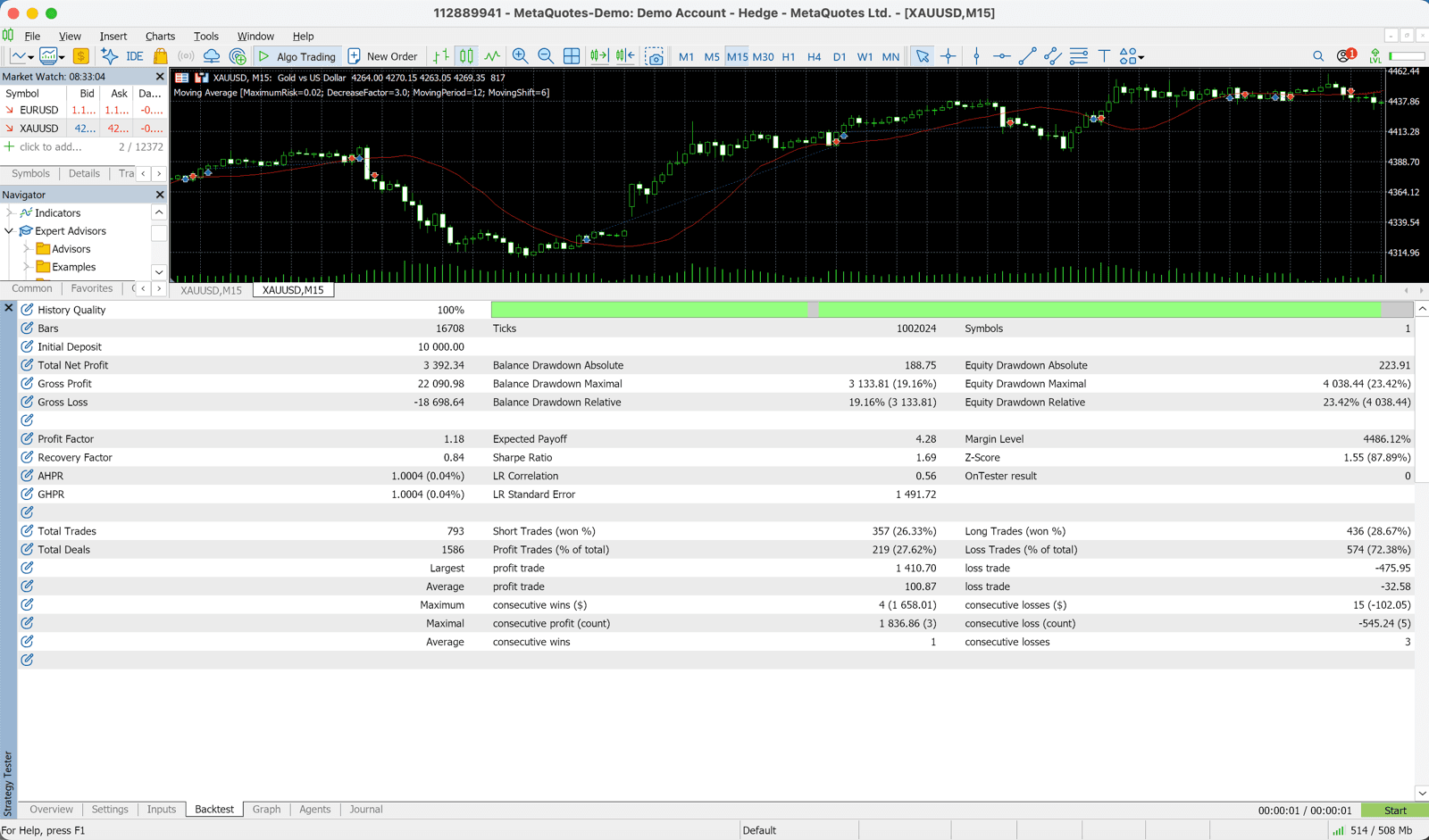
The first thing you notice in a backtest report is the net profit — but evaluating an EA on that alone is dangerous. A large net profit could be masking an account that was cut in half at some point, or it might simply be the result of oversized lots.
Evaluating an EA requires looking at "how much it earned" and "how much risk it took" together. It helps to read the report metrics through three lenses: profitability, risk, and stability.
Metrics for Profitability
Total Net Profit
Gross profit minus gross loss — the bottom-line P&L. It's the final score, but cannot be evaluated in isolation.
Profit Factor (PF)
Gross profit ÷ gross loss. 1.0 = breakeven, above 1.0 = profitable. A healthy range is 1.1–1.5. Above 3.0, suspect curve-fitting.
Expected Payoff
Average P&L per trade. A positive value means each trade has a positive expected value. It should be positive after accounting for costs.
Recovery Factor
Total net profit ÷ maximum drawdown. Shows how much was earned relative to the drawdown taken. Higher is more efficient.
Metrics for Risk
Maximal Drawdown
The largest peak-to-trough decline in account balance (shown as both % and dollar amount). This is the decline you'll need to endure in live trading.
Relative Drawdown
Drawdown expressed as a percentage of account balance. Closest to the pain you feel in live trading. A common benchmark is under 20%.
Consecutive Losses
The maximum number of consecutive losing trades. In live trading, assume the actual streak could exceed this — and size your money management accordingly.
Loss from Consecutive Losses
The total loss during the worst losing streak, not just a single trade. Verify that your account can absorb this amount.
Metrics for Stability
Total Trades
A measure of statistical reliability. Fewer than 100 trades is borderline; fewer than 300 means results could easily be due to chance.
Win Rate
Percentage of winning trades. Meaningless on its own — must be read alongside risk/reward ratio. A 40% win rate with an RR of 1:2 still produces a positive expected value.
Sharpe Ratio
Return efficiency relative to risk (volatility). Higher means more consistent performance. A common benchmark is around 1.0.
Equity Curve (Balance Graph)
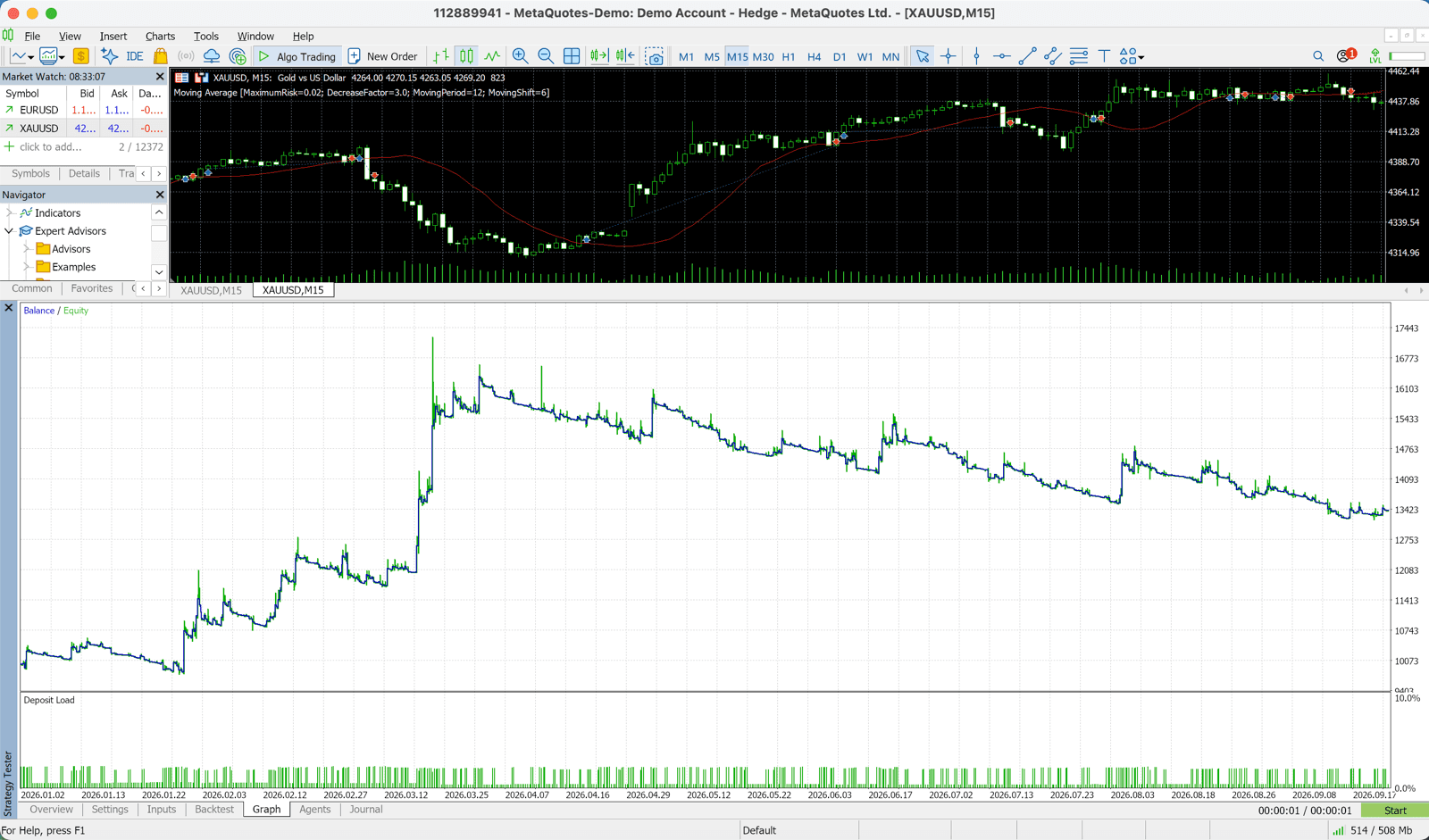
Not a number, but arguably the most important indicator. Too smooth suggests curve-fitting; a staircase pattern indicates stability; sudden drops reveal where the risks are concentrated.
Healthy Benchmarks for Each Metric
These are healthy benchmarks for an EA based on a backtest of five years or more. If the numbers look too good, treat that as a red flag for over-optimization.
| Metric | Healthy Range | Warning Sign |
|---|---|---|
| Profit Factor | 1.1–2.0 | Above 3.0 (suspect curve-fitting) |
| Relative Drawdown | 10–25% | Above 40% (excessive risk) |
| Recovery Factor | 2.0 or above | Below 1.0 (poor efficiency) |
| Total Trades | 100 or more | Below 50 (insufficient reliability) |
| Sharpe Ratio | 0.5 or above | Negative (return does not justify the risk) |
🔬 Verify Whether the Numbers Are Real
Good backtest metrics mean nothing if the EA is over-optimized — performance won't hold up in live trading. Use walk-forward analysis to verify whether the edge is genuine.
Read About Walk-Forward Analysis →